





Growing Kids Need More Than Just Protein
As parents, it's easy to wonder if your child is getting enough protein.
With so much attention on protein-packed snacks, high-protein lunches, and protein shakes, it's become one of the most talked-about nutrients—and for good reason. Protein plays an essential role in helping children grow, and thrive.²
But here's something that's easy to overlook: protein doesn't work alone.
Healthy growth depends on a combination of nutrients working together every day. Along with high-quality protein, children also need functional fats, vitamins, minerals, fiber, and other nutrients that support everything from brain development to strong bones, digestive health, and the immune system.³
That's why nutrition experts encourage parents to think beyond protein alone and focus on the bigger picture: complete nutrition.³˒⁴
Why is protein important for kids?
Protein is one of the body's fundamental building blocks.¹
Every day, children use protein to build and repair tissues, support growing muscles, produce enzymes and hormones, maintain healthy organs, and help their immune systems function properly. During periods of rapid growth like infancy, childhood, and adolescence, meeting protein needs is especially important.¹
Protein is made up of smaller components called amino acids. While the body can make some amino acids on its own, there are nine essential amino acids that must come from food.¹˒²
Without enough dietary protein, children may not get the amino acids their bodies need to support normal growth and development.²
Not all protein is the same.
When people talk about protein, they often focus on how many grams are in a food. But protein quality matters, too.¹˒²
A high-quality (i.e. “complete”) protein provides all nine essential amino acids in appropriate amounts. These amino acids work together to support healthy growth and countless processes throughout the body.¹˒²
Complete proteins can come from both animal and plant sources. Advances in plant-based nutrition have made it possible to provide complete protein from thoughtfully selected plant ingredients, offering families more options that fit their preferences and nutritional needs.
Growth requires more than protein.
Protein may get the spotlight, but it's only one part of the nutrition story.
Children's bodies rely on a wide variety of nutrients that work together to support healthy growth and development.³
For example:
Calcium and vitamin D help support growing bones.
Iron helps transport oxygen throughout the body.
Functional fats, including DHA, help support brain and eye health
Fiber helps support digestive health.
B vitamins help convert food into energy.
Vitamins A, C, D, and E, and zinc to help support a healthy immune system.
No single nutrient can do every job. That's why nutrition experts emphasize overall dietary quality rather than focusing on any one nutrient in isolation.³˒⁴

What the research says:
Research continues to reinforce an important idea: healthy growth is supported by overall nutrition—not simply eating more protein.³˒⁴
Scientists have found that adequate protein intake is essential because it supplies the amino acids needed for growth, maintenance, and normal body function.¹˒² At the same time, emerging research suggests that the quality of a child's overall diet (including the balance of protein, functional fats, vitamins, and minerals) plays a vital role in supporting healthy growth outcomes.³˒⁴
Rather than viewing nutrients separately, researchers increasingly recognize that they work together as part of a complete dietary pattern.³
For parents, that's encouraging news. It means supporting your child's nutrition isn't about chasing a single number or adding protein to everything they eat. It's about offering balanced nutrition over time.⁴
What about picky eaters?
If you've ever packed a lunch only to have it come home untouched, you're not alone.
Many children go through phases where they eat only a handful of familiar foods, skip meals, or have unpredictable appetites. Some days they'll surprise you by trying something new. Other days they'll seem to live on crackers and fruit snacks.
This can be completely normal.
Instead of aiming for perfection at every meal, many pediatric nutrition experts encourage families to think about nutrition over days and weeks rather than individual meals.
Having nutritious, convenient options available can help bridge the gap on days when eating doesn't go quite as planned.
Complete nutrition can help fill nutritional gaps.
For busy mornings, growth spurts, after-school activities, or periods of picky eating, complete nutrition products can help provide important nutrients children need.
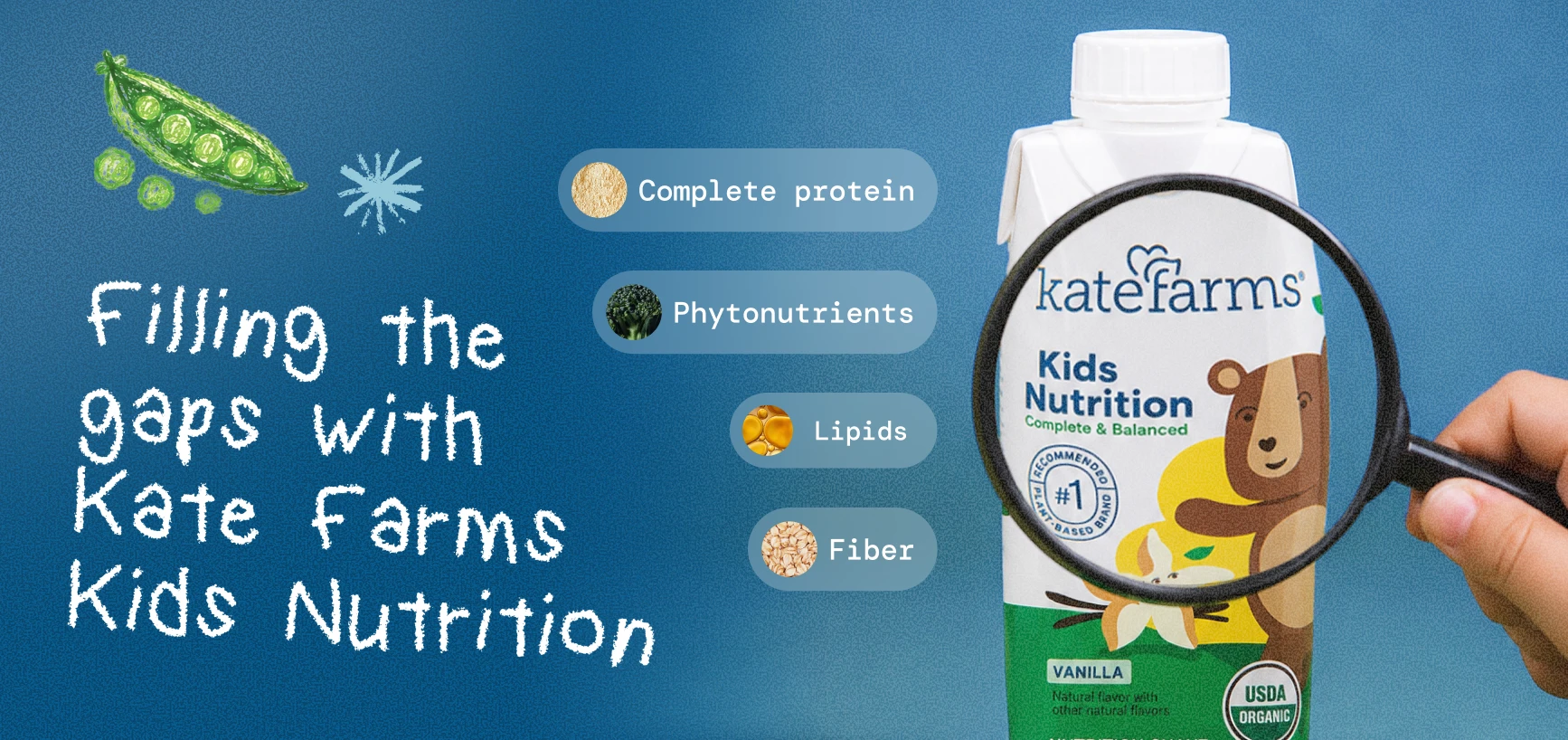
Kate Farms® Kids Nutrition provides:
A source of complete protein
27 vitamins and minerals
DHA
Organic ingredients
Ready-to-drink convenience
It's thoughtfully formulated to provide balanced nutrition in a way that's easy for families to incorporate into everyday routines.
Whether enjoyed as part of breakfast, packed alongside lunch, or offered as a snack, it can help support nutrition on the days when meals don't go exactly as planned.


The content on this site (the “Content”) is provided for information purposes only. Kate Farms has attempted to include information it believes to be reliable and accurate as of the date of this Content. Kate Farms expressly disclaims and makes no representation or warranty of any kind, express or implied, as to the Content including the accuracy or completeness of the information in this Content. Kate Farms shall have no liability relating to or resulting from the use of this Content. The Content is not intended as a replacement for medical advice, approved practices or policies of a particular physician and/or healthcare facility standards of care, all of which you should consider when using this Content.
References:
1. Guidance on Energy and Macronutrients across the Life Span. https://www.nejm.org/doi/full/10.1056/NEJMra2214275
2. Rosenbaum J, Abariga S, Wang Y, Wallach T. Association between protein consumption and height and weight among young children: analysis of Multiple Indicator Cluster Surveys. Philos Trans R Soc Lond B Biol Sci. 2026 May 14;381(1950):20250093. doi: 10.1098/rstb.2025.0093. PMID: 42132025.
3. Weaver CM, Georgieff MK, Girardi G, Kleinman R, Ramakrishnan U, Sacheck JM, Zemel BS, Papoutsakis C, Raiten DJ. Understanding the Biological Evidence and Emerging Research Gaps in Nutrition That Impact the Health of School-Aged Children-a Report from the "Biomarkers of Nutrition for Development: Knowledge Indicating Dietary Sufficiency (BOND-KIDS)" Project Working Group 1. J Nutr. 2026 Jun 10:101662. doi: 10.1016/j.tjnut.2026.101662. Epub ahead of print. PMID: 42269932.
4. Story MT, Patel AI, Lott ME, Schwartz MB. A Pediatric Perspective on the 2025-2030 Dietary Guidelines. JAMA. 2026;335(22):1925–1926. doi:10.1001/jama.2026.6696